Very provocative, in the context of a relatively corseted English academic art, Walter Sickert painted unusual subjects such as music hall scenes, or later, de-eroticised nudes stripped of all glamour in poor Camden Town interiors. His contemporaries were struck by the artist’s choice of colours - as virtuoso as strange, inherited from training with Whistler - and disconcerting framing. From 1890, Sickert travelled more regularly to Paris and Dieppe, eventually settling in the seaside resort from 1898 to 1905. He was heavily influenced by the French art scene and became close to Edgar Degas, Jacques-Émile Blanche, Pierre Bonnard, Claude Monet and Camille Pissarro.
At the end of his career, between the two world wars, Sickert innovated by turning news photographs into paintings, a process largely taken up in the 1950s by artists. While he never crossed the threshold into abstraction, Sickert unceasingly provoked the art world and the public with his iconographic and pictorial inventions. Indeed, the legacy of his art is the lasting mark it left on the work of many artists for generations to come, notably that of Francis Bacon and Lucian Freud.
The exhibition is organised with Tate Britain and Petit Palais, Paris Musées.
-
tate-logo - Nouvelle fenêtre

Curation of the Tate Britain:
- Alex Farquharson, Director, Tate Britain
- Emma Chambers, Curator, Modern British Art, Tate Britain
- Caroline Corbeau-Parsons, Curator of Drawings, Musée d'Orsay and former Curator, British Art, 1850-1915 at Tate Britain
- Thomas Kennedy, Assistant Curator, Modern British Art, Tate Britain
Curation of the Petit Palais:
- Annick Lemoine, General Curator, Director of the Petit Palais
- Delphine Lévy, Director of Paris Musées (2013-2020)
- Clara Roca, Curator in charge of 19th- and 20th-century graphic arts collections and photography at Petit Palais
In partnership with
-
RATP - Nouvelle fenêtre
-
FNAC - Nouvelle fenêtre
-
sncf logo - Nouvelle fenêtre
-
Troiscouleurs - Nouvelle fenêtre
-
Beaux Arts - Nouvelle fenêtre
-
figaroscope_jepg.png - Nouvelle fenêtre
-
Logo Paris Première - Nouvelle fenêtre
-
Logo télérama - Nouvelle fenêtre
-
Logo france culture - Nouvelle fenêtre





-

Black Bird of Paradise. Walter Sickert
Leeds Museums and Galleries, UK / Bridgeman Images -

L'Hôtel Royal Dieppe. Walter Sickert
Sheffield Museums / Bridgeman Images -

Little Dot Harrington at the Old Bedford. Walter Sickert.
James Mann / Collection particulière -

Bathers, Dieppe. Walter Sickert
National Museums Liverpool / Bridgeman Images -

St Mark’s, Venice (Pax Tibi Marce Evangelista Meus). Walter Sickert
2022 Tate Images -

Ennui. Walter Sickert
2022 Tate Images -

Rehearsal, The End of The Act. The Acting Manager. Walter Sickert
Christie’s Images / Bridgeman Images


Publication
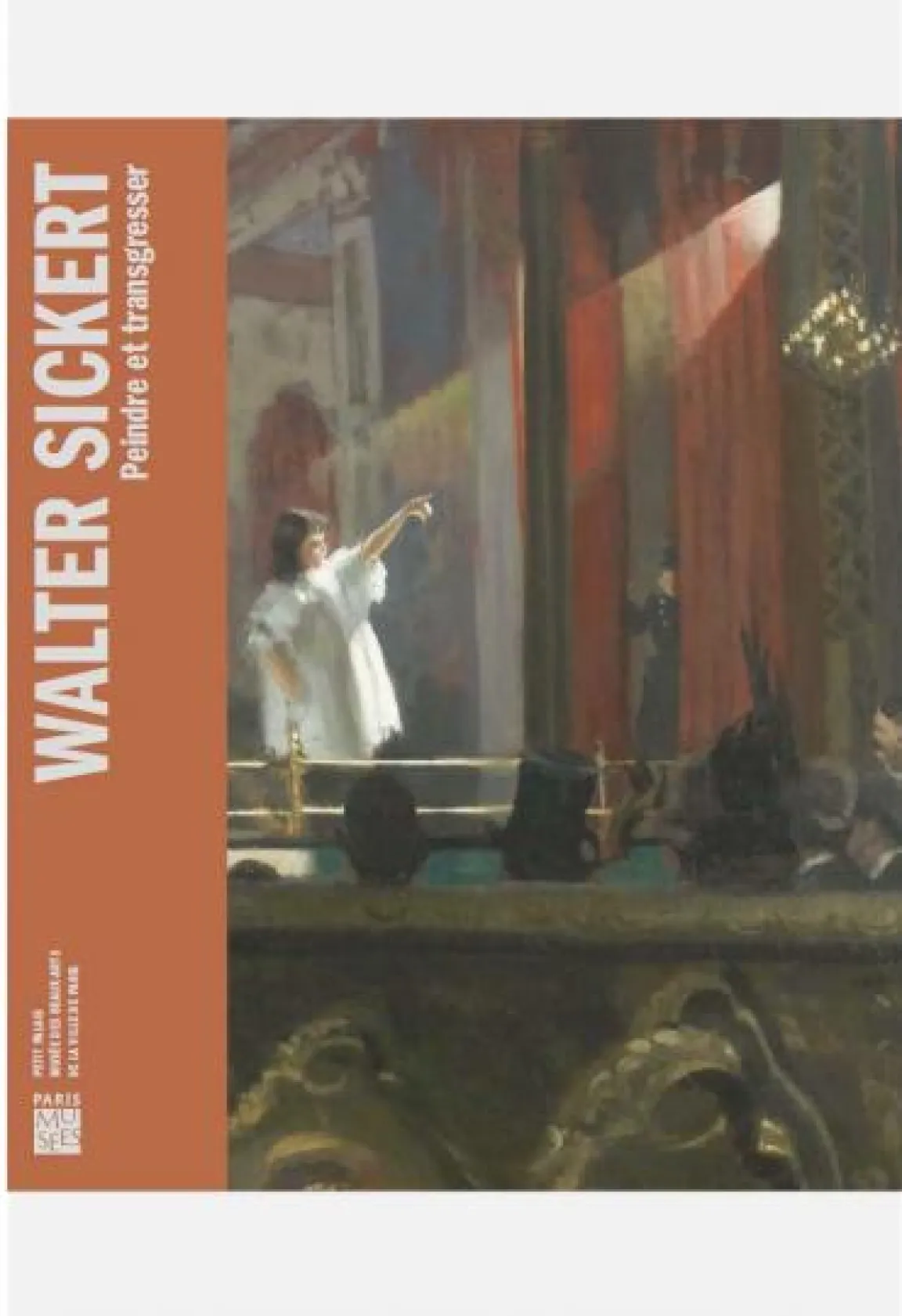
Walter Sickert (1860-1942) fait partie des pionniers de la modernité anglaise, marquant durablement la peinture figurative anglaise du XXe siècle, notamment celle de Lucian Freud et de Francis Bacon.Il traite d’emblée de thèmes inhabituels, voire transgressifs – music-halls, nus réalistes dans des intérieurs modestes, scènes de genre angoissantes ou ambigües – par le biais de cadrages déroutants ou d’étranges tonalités.Proche de son mentor Edgar Degas, mais aussi d’artistes comme Pierre Bonnard, il tisse un lien fort avec la France, ce qui l’incite à renouveler sa manière de peindre.De la modernisation du genre traditionnel de la conversation piece à la transposition d’images issues de la culture populaire, cet artiste provocateur et fascinant ne cessera de se réinventer, au-delà de toutes conventions.
Auteur(s) : Sous la direction d’Emma Chambers et Clara Roca
Exposition : Walter Sickert
Format : Relié
Nombre de page : 240
Nombre d'illustration : 230
Dimensions : 23,5 x 28 cm
ISBN : 978-2-7596-0539-2
Date de publication : octobre 2022
Langue : Français
Editeur : Éditions Paris Musées
Prix public : 39€